
The Future of AI in TVET: Personalised Assessments and Skill Intelligence for 2026
Artificial intelligence is redefining how technical and vocational education assesses learners. By 2026, AI tutors, adaptive learning systems, and real-time skill intelligence will make personalised assessment the new global standard.
In short
By 2026, AI transforms TVET assessment through adaptive platforms and data-driven skill intelligence. This enhances personalisation, provides real-time insights into learner progress, and bridges gaps between education and evolving workforce needs, enabling educators to deliver targeted feedback and support across diverse learning environments.
Key takeaways
- AI enables adaptive, personalised assessments in TVET
- Skill intelligence links curriculum to workforce needs
- Trainers gain better tools for real-time learner feedback
- Data-driven insights help identify and close skills gaps
In 2026, Technical and Vocational Education and Training (TVET) continues to evolve from paper-based exams and practical observations toward data-driven, adaptive, and intelligent assessment ecosystems.
Artificial intelligence (AI) now plays a pivotal role in how learners demonstrate competence, from micro-credentials to national qualifications.
Rather than replacing trainers, AI extends their reach — enabling more frequent feedback, fairer evaluation, and genuine personalisation at scale.
The shift reflects a global movement championed by organisations such as UNESCO-UNEVOC and the OECD to build flexible, inclusive learning systems aligned to future work demands.
What Is “Skill Intelligence”?
By 2026, TVET systems aren’t only assessing learners — they’re analysing skills ecosystems.
Skill intelligence refers to the ability to capture, interpret, and act on real-time data about how competencies develop and transfer between roles.
AI helps TVET institutions map which skills are emerging, where gaps exist, and how learners progress over time.
This intelligence informs everything from curriculum design to workforce planning, creating a tighter link between education and employment.
How AI Personalises Assessments
Artificial intelligence reshapes the entire assessment process. Here’s how:
1. Adaptive Learning Engines
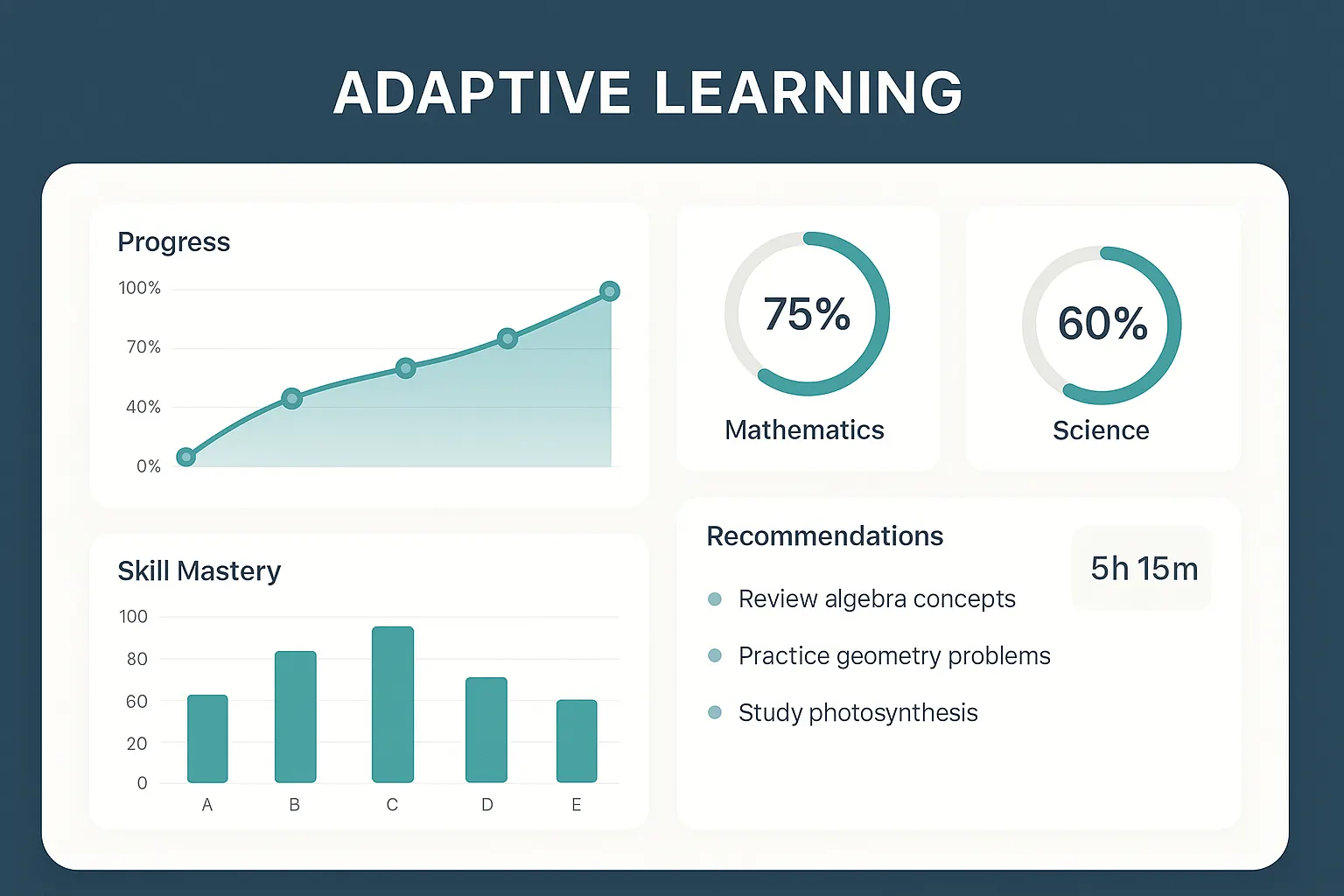
Platforms such as Century Tech, Squirrel AI, and Smart Sparrow use machine learning to analyse learner performance and adjust assessments automatically.
A trainee mechanic who excels in fault diagnosis may receive more complex engine simulation tasks, while another who struggles with theory is guided toward micro-lessons and practice exercises.
2. Generative AI for Assessment Design
By 2026, generative AI tools can create scenario-based questions, role-play simulations, or written assignments aligned to specific occupational standards.
Trainers feed the system learning outcomes, and AI drafts multiple versions of tasks — reducing bias and keeping assessments current.
Example: A hospitality trainer uses a generative tool to produce realistic case studies on sustainable kitchen management, instantly aligned with local qualification criteria.
3. Real-Time Feedback and AI Tutors
Conversational AI tutors embedded within learning platforms support formative assessment.
They analyse a learner’s responses, highlight misconceptions, and suggest targeted resources — functioning like a virtual mentor available 24/7.
These AI tutors are especially valuable in remote or hybrid TVET settings, ensuring continuous engagement between sessions.
4. Multimodal Performance Evaluation
Computer vision, gesture recognition, and speech analysis now allow AI to assess hands-on competencies.
For example, in welding or healthcare training, AI systems evaluate technique, precision, and safety compliance using sensors and video analytics.
This provides objective data to complement trainer observations.
Global Trends Driving AI Assessment in 2026
The adoption of AI in TVET varies across regions but shares a common goal: equitable, efficient, and future-ready skills verification.
🌏 Asia-Pacific: Scaling Adaptive Platforms
Countries such as Singapore, China, and South Korea are expanding national initiatives that embed adaptive learning systems across vocational colleges.
In China, Squirrel AI operates as part of large-scale competency-based programmes that adapt daily to learner data.
🌍 Africa: Leapfrogging with Mobile AI
Emerging economies are integrating lightweight AI apps compatible with mobile devices.
Partnerships supported by UNESCO’s Global Skills Academy are providing access to open-source adaptive assessment tools to increase equity.
🇪🇺 Europe and the OECD: Skills Portability
The OECD’s Skills Strategy encourages data-driven approaches to lifelong learning.
By 2026, AI-verified digital credentials are becoming standard, creating portable “skills passports” that store verified evidence of learning across borders.
🌎 Americas: Industry Collaboration
TVET systems in Canada, Brazil, and Chile are working with edtech providers to develop AI-enhanced apprenticeships, where real-world performance data feeds directly into assessment portfolios.
The Tools Leading the Transformation
Here are key categories of AI tools influencing personalised assessment globally in 2026:
| Category | Examples | Function |
|---|---|---|
| Adaptive learning systems | Century Tech, Squirrel AI, Smart Sparrow | Dynamic adjustment of tasks and content |
| Generative AI authoring | ChatGPT, Gemini, Copilot Studio | Automatic creation of contextualised assessments |
| Automated marking platforms | Gradescope, Inspera, SpeedGrader AI | Faster, consistent evaluation of written work |
| Simulation and VR environments | Labster, EON Reality, Cognitran | Practice and assessment in virtual settings |
| Predictive analytics dashboards | Learning Locker, Power BI Education | Early identification of learners needing support |
| Digital credentialing systems | Credly, OpenBadges, SkillPass | Secure verification of achieved competencies |
The Benefits: Smarter, Fairer, and More Human
When designed ethically, AI enhances rather than replaces human judgment.
Its most significant advantages in TVET assessment include:
- Fairness: Adaptive difficulty ensures learners are assessed at the right level.
- Feedback speed: Immediate responses reinforce learning through timely correction.
- Data-driven insight: Trainers can visualise strengths and gaps across classes or cohorts.
- Efficiency: Reduced administrative burden means more time for mentoring.
- Inclusivity: Multilingual AI and accessibility features support diverse learners.
This aligns with WorldSkills International’s focus on inclusive excellence and digital readiness across the global skills community.
Ethical Considerations and Human Oversight
AI’s potential also demands caution.
The UNESCO Recommendation on the Ethics of Artificial Intelligence emphasises that transparency, accountability, and fairness are non-negotiable.
Key challenges for 2026:
- Data privacy: Institutions must meet evolving data-protection laws and clearly communicate how learner data is used.
- Algorithmic bias: Regular audits ensure fairness across gender, culture, and language groups.
- Trainer readiness: Professional development must keep pace — digital confidence and ethical literacy are as vital as technical know-how.
- Equity of access: Infrastructure and cost barriers remain in parts of the Global South, where open-source AI could be the bridge.
The Road Ahead: What 2026 Will Bring
As the line between learning and work continues to blur, AI will underpin continuous assessment — tracking performance across classrooms, apprenticeships, and workplaces.
By the end of 2026, expect to see:
- AI-powered micro-credentials that verify individual skills in real time.
- Predictive coaching systems recommend when learners are ready for certification.
- Intelligent feedback companions are integrated into workplace learning apps.
- Real-time digital portfolios that update automatically as learners demonstrate competence.
These trends reflect the move toward lifelong, portable skills ecosystems, as promoted by UNESCO, the OECD, and WorldSkills.
In essence, AI transforms assessment from a snapshot into a continuous narrative of growth.
Preparing Trainers for the AI Era
For trainers, success in 2026 isn’t about mastering coding — it’s about understanding how to guide AI tools effectively.
Practical steps:
- Experiment: Try AI quiz generators or analytics dashboards for small units.
- Collaborate: Join networks like UNEVOC’s Community of Practice.
- Critically evaluate: Check AI outputs for accuracy, bias, and alignment with competency standards.
- Upskill: Engage in CPD focused on digital pedagogy, data literacy, and ethical AI.
The best trainers will combine human empathy with data-driven insight — the true hallmark of 21st-century vocational education.
Conclusion
The future of AI in TVET is not about automation for its own sake — it’s about amplifying the human element of teaching and assessment.
As skill intelligence becomes central to global education systems, trainers who embrace ethical, data-driven approaches will lead the way in preparing learners for tomorrow’s jobs.
AI doesn’t replace the craft of good teaching; it gives it sharper tools.
FAQs
What is skill intelligence in TVET?
Skill intelligence in TVET refers to the use of AI to capture and analyse real-time data on competency development, identifying emerging skills, gaps, and progression to inform curriculum design and workforce planning for better alignment between education and employment.
How does AI personalise assessments in vocational training?
AI personalises assessments through adaptive learning engines that adjust task difficulty based on performance. It also uses generative tools for creating scenario-based questions, real-time feedback from AI tutors, and multimodal evaluations using computer vision for hands-on skills like welding or healthcare.
What global trends are driving AI adoption in TVET by 2026?
Global trends include Asia-Pacific's scaling of adaptive platforms in countries like Singapore and China, Africa's mobile AI initiatives for equity, Europe's focus on skills portability via digital credentials, and the Americas' industry collaborations for AI-enhanced apprenticeships.
What are the benefits of AI in TVET assessments?
AI enhances TVET assessments by promoting fairness through adaptive difficulty, providing immediate feedback for better learning, offering data-driven insights for trainers, improving efficiency to free up time for mentoring, and ensuring inclusivity with multilingual and accessible features.
What ethical considerations are essential for AI in TVET?
Ethical considerations for AI in TVET include safeguarding data privacy under evolving laws, auditing algorithms to prevent bias across diverse groups, ensuring trainer readiness through professional development, and addressing equity of access, particularly in the Global South, via open-source tools.
Keep reading
Why Every TVET Trainer Should Be Using AI (And How to Start Properly)
AI isn't replacing TVET trainers — it's replacing the blank page. Here's why trainers, assessors and tutors should be using AI properly, and how a new course built for the sector helps you start.
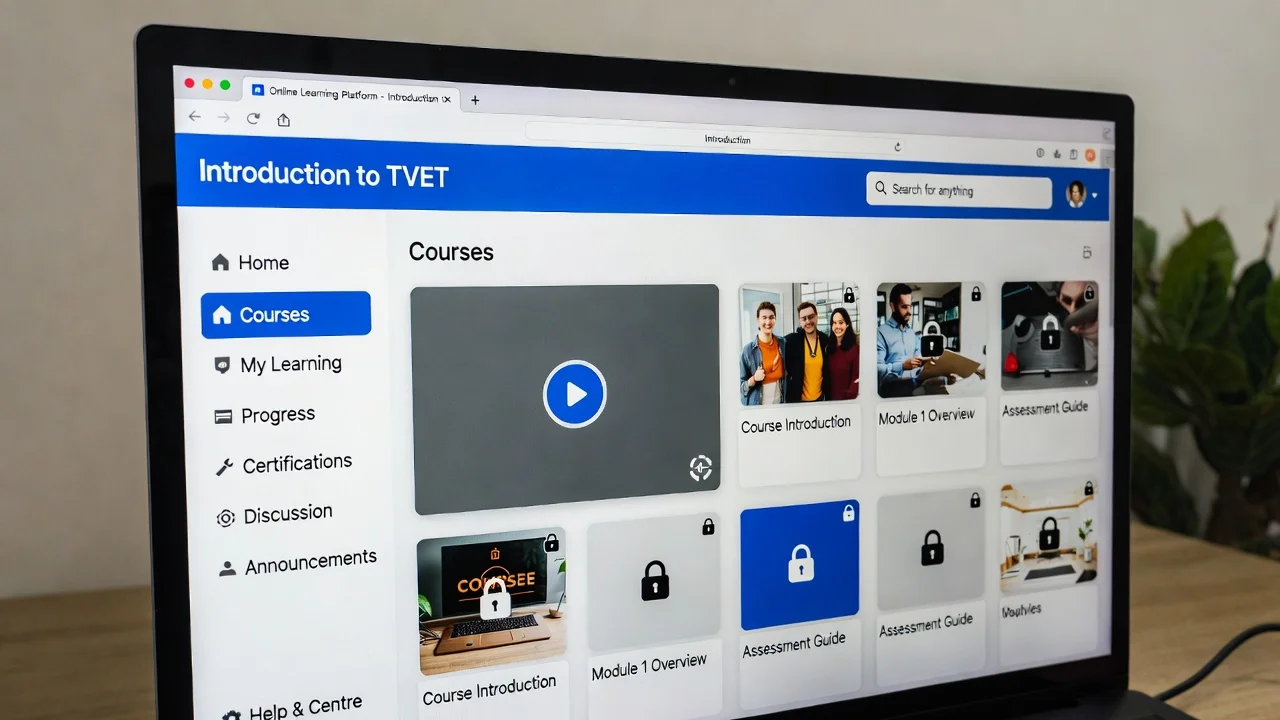
Micro Learn Online: SCORM Training Packages You Can Deploy to Your LMS
Most TVET providers already run a SCORM-capable LMS and still have gaps in their content library. Micro Learn Online offers ready-made SCORM 1.2 packages you can upload in minutes and pay for by the learner.

How AI is Revolutionising Assessment and Feedback in Education: Benefits, Challenges, and Future Trends
Artificial Intelligence is revolutionising assessment and feedback in TVET by providing personalised, immediate insights and automating routine tasks, enabling trainers to focus on creative teaching while preparing learners for dynamic industries through ethical, data-driven approaches.