
Tracing TVET: From Apprenticeship to National Systems
This article traces the historical development of Technical and Vocational Education and Training (TVET), highlighting key shifts from informal apprenticeships and factory-era specialisation to coherent national frameworks, knowledge-economy innovation, and lifelong reskilling.

In short
The article traces how vocational learning developed from informal, hands-on apprenticeships in workshops and households into organised TVET systems. It explains how industrial change, public policy and labour-market needs expanded training methods, leadership responsibilities and partnerships while preserving TVET’s core focus on practical skills and workplace learning.
Key takeaways
- TVET began with apprenticeship-based learning in real workplaces.
- Industrial and economic change expanded vocational training systems.
- Policy and institutions shaped TVET into national programmes.
- Practical capability and workplace assessment remain central.
- Leaders must build partnerships and respond to labour-market shifts.
An enduring thread runs through the history of vocational education: people learning practical skills from experienced practitioners to meet the needs of work and community. Over centuries, that simple exchange—from a craftsman teaching an apprentice to a college delivering industry-certified programmes—has transformed in scale, purpose and method. This page traces that journey in clear steps, showing how shifts in production, policy and economy reshaped vocational learning into the complex, flexible systems we call Technical and Vocational Education and Training (TVET) today. Each phase brought new responsibilities for leaders: to design curricula, build partnerships, recognise prior learning and prepare learners for changing labour markets.
From craft workshops to structured apprenticeships
In many societies, the earliest vocational learning took place in workshops, households and small enterprises. An apprenticeship was a formal or informal arrangement in which a novice learned a trade through long-term, hands-on practice under a skilled artisan. Apprenticeship here means a learning relationship combining work, mentoring, and often room-and-board; it is not a classroom-only model—guilds, family businesses, and community networks regulated skills, quality, and usually the movement of labour. For TVET practitioners, this origin explains two durable features: strong emphasis on practical capability and the value of workplace-based assessment.
These traditional forms persist in many parts of the world as informal or semi-formal learning routes. For example, street vendors, textile makers and traditional carpenters continue to pass tacit knowledge directly to learners. Recognising and validating these skills—through systems such as recognition of prior learning (RPL)—remains a core leadership task where formal certification is needed.
The factory era: formalising skills for mass production
Industrialisation introduced factory-based production and the need for standardised, repeatable skills. Fordism, the mass-production model associated with assembly lines and process specialisation, required workers trained to perform tightly defined tasks reliably. Governments and employers responded by creating technical schools, vocational institutes, and short courses focused on mechanical, electrical and trade skills. In this period, TVET became more institution-centred: centres of learning were organised to supply predictable labour for factories rather than to cultivate broad problem-solving ability.
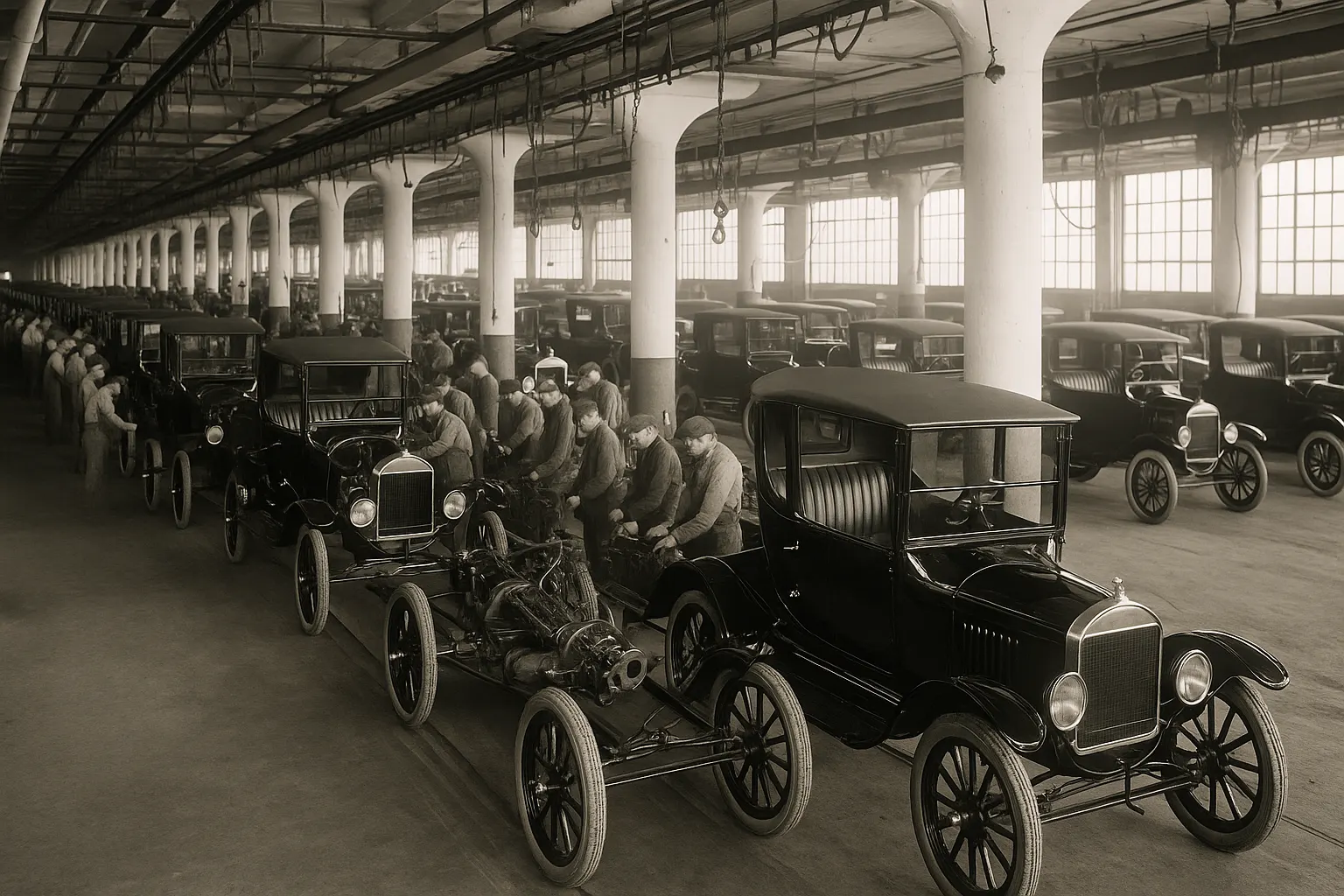
For TVET practitioners, the legacy of the factory era is both practical and limiting. The clear benefit was a reliable supply of technicians and artisans with measurable competencies. The limitation was narrow curricula and weak pathways to higher education or innovation roles. Addressing that legacy means redesigning programmes to balance efficiency with adaptability.
Building national systems: permeability and parity of esteem
As economies and societies grew more complex, many countries moved from ad hoc training to coherent, nationally regulated TVET systems. System building involves creating qualifications frameworks, accreditation mechanisms, employer engagement processes and career pathways that connect vocational and academic learning. The core idea here is permeability: learners should be able to move between vocational and academic routes without losing credit or status. Permeability requires aligned curricula, credit transfer arrangements and clear quality assurance.
Real-world examples show different policymaking choices. Germany’s dual system combines company-based training with vocational school, producing strong employer ownership. Other countries developed sectoral authorities, national qualification frameworks or skills councils to harmonise standards. For TVET leaders, developing such system-level arrangements means investing in partnerships, shared assessment standards and clear communication of the value of vocational qualifications.
Knowledge economies and the turn to innovation
Over recent decades, economies driven by knowledge, services, and digital technologies have reshaped the purposes of TVET. A knowledge-based economy values information processing, creativity, problem-solving and continual learning more than repetitive manual tasks. This shift expanded the role of TVET from supplying routine skills to encouraging innovation, entrepreneurship and adaptability. New occupational profiles—such as digital technicians, renewable energy installers and data analysts—combine technical expertise with higher-order cognitive skills.
In practice, this requires TVET programmes to include project-based learning, interdisciplinary units, digital literacy and opportunities for learners to engage in applied research or enterprise projects. Partnerships with industry become collaborative innovation ecosystems rather than simple recruitment channels. For practitioners, the implication is clear: curricula must be redesigned to embed transferable skills alongside technical competence.
Lifelong learning: continuous reskilling and flexible credentials
The final transformation is the rise of lifelong learning as a central TVET function. Lifelong learning means that education and training are not confined to youth but are available throughout working life to support career transitions, technological change and personal development. To operationalise this, institutions offer modular courses, short upskilling programmes, micro-credentials and recognition of prior learning systems that allow workers to accumulate and transfer learning over time.
Digital platforms, evening and blended delivery models make lifelong learning feasible at scale. National strategies that subsidise adult learning or provide learning accounts illustrate how policy can support continuous access. For TVET leaders, building lifelong learning systems requires flexible timetabling, modular curricula, digital capacity and mechanisms to measure the impact of short courses on employability.
Five milestone shifts and their implications for practice
- Apprenticeship to formal institutions: moved learning from workplaces to schools, requiring standard curricula and assessment systems to maintain workforce quality.
- Factory-era specialisation (Fordism): created task-specific training; leaders must now broaden curricula to restore adaptability.
- National systems and qualifications frameworks: improved consistency and mobility; leaders should prioritise alignment and credit transfer.
- Knowledge-economy orientation: creativity and problem-solving are added as core outcomes; practitioners must integrate project-based and digital learning.
- Lifelong learning and modular credentials: shifted learning across the lifespan; institutions must offer flexible, recognisable micro-credentials and RPL.
Concluding this overview, TVET’s history is best seen as a sequence of expansions in purpose and method. Each stage added responsibilities for institutions and leaders to balance the supply of practical skills with broader social and economic objectives. Today’s challenge is to combine the craft-rooted strengths of hands-on learning with system-level coherence, digital readiness and a lifelong-learning ethos that prepares learners not just for a first job, but for a career of change.
Frequently Asked Questions (FAQs)
What is the origin of TVET, and how did it begin with apprenticeships?
TVET originated in craft workshops and households where novices learnt practical skills through hands-on apprenticeships under skilled artisans, emphasising workplace-based mentoring and assessment. This model persists in informal sectors today and informs modern recognition of prior learning (RPL) systems.
How did industrialisation transform vocational education into formal TVET systems?
Industrialisation, particularly through Fordism and mass production, shifted vocational training from ad hoc apprenticeships to institution-centred technical schools and institutes. This shift focused on standardised skills for factory work, though it created narrow curricula that modern TVET leaders must broaden for adaptability.
What are national TVET systems, and why is permeability important?
National TVET systems involve regulated qualifications frameworks, accreditation, and employer partnerships to ensure consistency and mobility; permeability allows seamless movement between vocational and academic paths via credit transfers, as seen in models like Germany's dual system, helping learners advance without losing status.
How has the knowledge economy influenced modern TVET practices?
The knowledge economy has expanded TVET's role to include creativity, problem-solving, and digital literacy alongside technical skills. This requires programmes with project-based learning and industry collaborations to prepare workers for roles in digital technologies, renewable energy, and innovation-driven sectors.
Why is lifelong learning a key feature of contemporary TVET?
Lifelong learning in TVET supports continuous reskilling through modular courses, micro-credentials, and flexible delivery methods like digital platforms. This enables workers to adapt to career changes and technological shifts, with policy support such as subsidised adult learning, enhancing employability across the lifespan.
Keep reading

Five TVET Milestone Shifts and Institutional Implications
This article examines five key milestone shifts in the evolution of Technical and Vocational Education and Training (TVET), detailing their implications for institutional human resources, curriculum development, and governance.
Competency-Based Training (CBT) in Technical and Vocational Education
Competency-Based Training (CBT) transforms TVET by prioritising measurable, job-ready skills over traditional theory, empowering trainers to prepare learners for real-world success through individualised learning and practical assessments.

Agile Learning Design - A New Approach
Agile Learning Design offers a dynamic alternative to traditional instructional models in technical and vocational education and training (TVET).