

Observation Records That Stand Up to Quality Assurance
Observation is the most important assessment method in work-based learning, and the observation record is the only lasting proof of what the assessor saw. A practical guide to writing records that another assessor, an IQA or an external quality assurer could rely on.
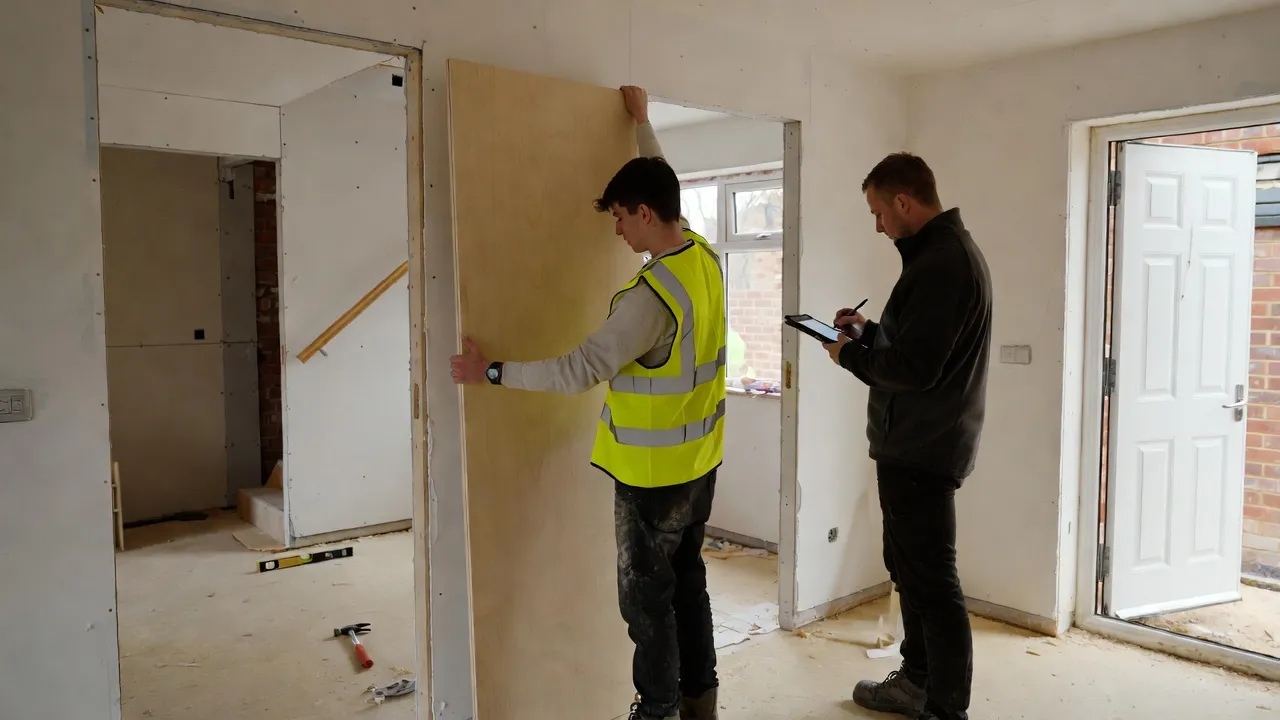
In short
An observation record that stands up to quality assurance describes what the assessor actually saw, not just the conclusion they reached. It records the date, location and context of the observation; a factual account of what the learner did, in sequence; the questions the assessor asked and the learner's answers; which assessment criteria the evidence meets and how; the assessment decision; and the feedback given. A good test is whether another competent assessor, reading only the record, would reach the same decision.
Key takeaways
- The record is the evidence — if it is not written down, the IQA cannot see it
- Describe what the learner did, in sequence, rather than writing conclusions such as "competent"
- Record questions and answers to evidence knowledge alongside performance
- Map only what you actually observed, even when one observation covers several criteria
- Photos and video need consent, context and secure storage
Observation sits at the centre of work-based assessment. Most competence-based qualifications require the assessor to watch the learner perform for real, and for many criteria nothing else will do. But once the observation is over, the only thing that remains is what the assessor wrote down. The internal quality assurer was not there. Neither was the external quality assurer. The record has to do all the work.
This guide covers what an observation record is for, what a robust one contains, the difference between a thin record and a strong one, and how to capture evidence efficiently on the job.
This article is about observing learners as part of their assessment. For observing teachers and trainers, see Observation of Teaching, Learning and Assessment in TVET.
Who reads an observation record
An observation record is written for several readers, and it needs to work for all of them:
- The learner, who needs to understand what went well, what did not, and what happens next
- The employer, who often wants to know how their apprentice or employee is progressing
- The internal quality assurer, who samples the record to check the assessment decision is sound
- The external quality assurer, who may sample the same record months later to check the centre's assessment and IQA
- You, when you plan the next assessment or return to the record during an appeal
The common thread is that none of these readers saw the observation. The record has to let them see it.
What a robust observation record contains
Centres use different forms and e-portfolio templates, but a record that stands up to scrutiny includes:
- The basics. Learner, assessor, date, start and finish time, location, and the qualification and units covered.
- Context. Whether the activity was planned or naturally occurring, the working conditions, and anything that affected the observation — a busy shift, a difficult customer, unusual equipment.
- A factual account of what the learner did. In sequence, describing actions rather than qualities. This is the heart of the record.
- Questions and answers. The questions you asked during or after the observation, and a summary of the learner's answers. This is often where knowledge criteria are evidenced.
- Criteria met, and how. Which criteria the observation evidences, with the link to the specific part of the account that proves each one.
- The decision. Whether the criteria observed have been met, and anything still outstanding.
- Feedback. What you told the learner, including strengths, areas to develop and next steps.
- Signatures and dates. From the assessor and the learner, and where your centre requires it, the employer.
A thin record and a robust record
Both of these describe the same observation: an apprentice carpenter hanging an internal door on a residential site.
Thin:
"Observed learner hanging a door on site. Learner worked safely and to a good standard. All PPE worn. Door hung correctly and finished to a high standard. Learner is competent in this activity. All criteria met for unit 4."
Every sentence is a conclusion. There is no description of what the learner actually did, no evidence of questioning, no link between the account and specific criteria, and no way for an IQA to check that the decision is right.
Robust:
"Observation on 9 September, 10.15–11.40, plot 14, new-build residential site. Planned observation. Learner was hanging a pre-finished internal door in a lined opening, working alone with the site supervisor nearby.
Learner checked the opening with a spirit level and noted it was out of plumb by about 3 mm on the hinge side. They measured the door and opening, marked the hinge positions at 150 mm from the top and 225 mm from the bottom, and set out the third hinge centrally. Recesses were cut with a router and template, and hinges fitted with the screws supplied. The door was offered up, found to bind at the head, removed, and planed. Learner explained the planing was because the frame was not square. Final gaps were checked with a packer and were even at around 3 mm. Learner fitted the latch and keep, tested the action and adjusted the keep so the door closed without rattling. Work area was cleared and offcuts bagged.
Questioning: asked why hinge positions were set where they were — learner explained standard positions and the need for the third hinge on a heavier door. Asked what they would do if the opening was too far out of plumb to correct by planing — learner said they would stop and report it to the supervisor rather than force the door to fit.
PPE: safety boots, eye protection while routing and planing, ear defenders while routing. Router used with dust extraction."
The robust version lets another assessor see the observation. It shows the learner dealing with a real problem, evidences knowledge through questioning, and gives the assessor something specific to map to each criterion.
How to write the account
A few habits make the difference between thin and robust records:
- Describe actions, not qualities. "Checked the opening with a spirit level" can be verified; "worked to a good standard" cannot.
- Write in sequence. Following the order of the task makes gaps obvious and helps readers follow what happened.
- Include what went wrong. A learner who spots and fixes a problem is often showing stronger competence than one whose task went perfectly. Leaving it out removes some of your best evidence.
- Record measurements, readings and specifics. Temperatures, dimensions, product names, times — whatever is normal in the occupation.
- Keep your judgement separate. Describe first, decide second. Your decision belongs in its own section, linked back to the account.
- Write it up promptly. Short notes during the observation, written up the same day while you still remember the detail.
Related: Measurement and Recording of Achievement in Assessments
Mapping one observation to several criteria
A single well-planned observation can evidence criteria across several units, which saves the learner and assessor a great deal of time. In the carpentry example, the same observation could contribute to criteria on setting out, using power tools, health and safety, and dealing with problems.
The rule is simple: map only what you actually saw or heard. Overclaiming — mapping criteria the observation did not genuinely cover — is one of the most common reasons IQAs return decisions.
- Map each criterion to a specific part of the account, so the link is visible
- Use questioning to evidence related knowledge criteria, and record the questions and answers
- If a criterion requires a range — different situations, materials or customers — one observation will rarely cover all of it
- Note any criteria that were partially evidenced and what is still needed
Related: The Benefits of Using a Holistic Approach to Assessment
Photos, video and audio
Digital evidence can strengthen an observation record, particularly for product evidence or complex practical tasks. It needs handling carefully.
- Context. Every photo or clip needs a caption explaining what it shows, when, and which part of the observation it relates to. An uncaptioned photo proves very little.
- Consent. Get consent from the learner and the employer, and take particular care where customers, patients, children or other members of the public could be identifiable. In many settings — health and care in particular — photographing people is not appropriate at all.
- Data protection. Treat images and recordings as personal data. Upload them to your centre's secure e-portfolio or storage, and do not keep them on a personal phone.
- Supplement, don't replace. A video of a task can be valuable, but it still needs your written account of what you observed and how it meets the criteria.
A checklist for your observation records
Before you sign off an observation record, check:
- Date, times, location and units are recorded
- Context is described, including whether the activity was planned or naturally occurring
- The account describes what the learner did, in sequence, rather than giving conclusions
- Problems and how the learner dealt with them are included
- Questions and answers are recorded
- Each criterion claimed is linked to a specific part of the account
- Nothing has been mapped that was not observed or evidenced through questioning
- Any photos or video are captioned, consented and stored securely
- Feedback and next steps are recorded
- The record is signed and dated
If you are not sure whether a record is strong enough, apply the test IQAs use: would another competent assessor, reading only this record, reach the same decision?
Related: VACSR Explained: Valid, Authentic, Current, Sufficient and Reliable Evidence
Frequently asked questions
How long should an observation record be?
As long as it needs to be to show what you saw and how it meets the criteria. A short observation of a single task may need half a page; a long observation covering several units may need several. Length is not the goal — enough description to support the decision is.
Can the learner write up the observation?
No. The observation record is the assessor's evidence of what they saw. The learner may add their own reflective account as separate evidence, but the record itself should be written by the assessor.
Can I observe remotely by live video?
Many centres and awarding organisations accept remote observation by live video for some qualifications, particularly where the task can be seen clearly on camera. Check the assessment strategy and your centre's policy, and record in the observation that it was carried out remotely.
Should I record the observation if the learner was not yet competent?
Yes. A record of an observation where the learner did not meet the standard is still valuable. It shows the learner's progress, supports the feedback you gave, and demonstrates to the IQA that your decisions are genuine rather than automatic.
What is the difference between observation and witness testimony?
Observation is carried out by the assessor, who makes the assessment decision. Witness testimony comes from someone else who saw the learner work, and supports the assessor's judgement rather than replacing it.
This article describes widely used assessment practice in general terms. Always follow the assessment strategy for the qualification you are assessing and your centre's policies on recording, digital evidence and data protection.
Keep reading
Reasonable Adjustments and Special Consideration in Vocational Assessment: Practical Examples
Reasonable adjustments make assessment fair for learners with disabilities and additional needs without lowering the standard. A practical guide for assessors and IQAs, with examples for dyslexia, visual impairment, physical disability, anxiety and more.

Standardisation in Vocational Assessment: Running Meetings That Actually Improve Consistency
Standardisation is meant to make sure every assessor reaches the same decision from the same evidence. Too often it becomes an update meeting with a signing-in sheet. A practical guide to activities that work, a ready-to-use agenda, and records an external quality assurer will value.

TAQA Qualifications Explained: What Replaced A1, D32/D33 and V1
If you trained as an assessor before 2010, you probably hold D32/D33 or A1. If you are starting now, you will be looking at TAQA. A guide to how the assessor and quality assurance qualifications have changed, what each one in the current suite is for, and whether your old certificate still counts.